1201 West Peachtree Street NW, Atlanta
Talk to ChopDawg About Your App
Tell us what you are building, or what is not working in something already built. A short description is enough to start: what the product does, who uses it, and what you need from a development partner. We read every inquiry and reply with a real response, not an automated sequence.
1 — Reach Us
Direct lines, working hours, and where we sit
Best for detailed project descriptions, existing codebases, and files you want us to look at before a call.
Phone
+1 404-532-5666Use this if you want to talk through scope quickly. If we miss you, leave a short message and we will call back.
Studio Hours
Monday–Friday, 9:00 AM – 6:00 PM Pacific Time
We schedule calls across U.S. time zones. Send the hours that work for you and we will match them.
1201 West Peachtree Street NW, Atlanta, GA 30309, United States
Response times
Inquiries get a reply within a few business days. Clients under a maintenance agreement have a defined response window for urgent issues, listed in that agreement. If something is genuinely on fire and you are already working with us, use the direct channel you were given rather than this page.
2 — Project Details
What to include in your message
The useful details are the ones that shape scope. What the app needs to do, which systems it connects to, whether anything exists yet, and roughly when you need it live. If there is a budget range you are working within, include it. That conversation goes better early than after three rounds of estimates.
You do not need a finished spec to write to us. A paragraph about the problem beats a polished brief that leaves out the constraints. If you have a sketch, a document, or an existing repository, mention it and we will tell you what we would want to see first.
Also useful to mention
- Whether this is a new build or a product that stalled with another team.
- Any store rejection, crash report, or platform review you are dealing with.
- Who on your side will make the final call on scope and timeline.
3 — Work Types
New builds and rescue work
New products
From idea to a shipped app
We take on products from scratch. Discovery defines what the first release has to do, then we build it for iOS, Android, and the web where that makes sense. You get the same team from the first workshop through to store submission, so nobody has to re-explain the product halfway through.
Rescue work
Projects that stalled elsewhere
If you are bringing an existing codebase, mention the platform it was built on and whether you have repository access. If it has been rejected by a store, say so. Both change how we start: a codebase review tells us what can be kept, and a rejection tells us which requirements were not met.
Ongoing care
Maintenance after launch
Apps need work after release: OS updates, store policy changes, dependency upgrades, and the small fixes users report. Maintenance agreements cover that ongoing effort with a defined response window, so urgent issues have a channel and a commitment instead of a guess.
Not sure which category you fall into? Say so in the message and describe the situation instead. Most projects are somewhere between a clean start and a rescue, and the reply will tell you how we would approach it.
See what we build4 — After you send it
We review the inquiry and reply, usually with a couple of clarifying questions and a suggestion for a call.
The first conversation is about scope and fit, not a pitch. If discovery makes sense as a next step, we describe what it involves and what it costs. If we are not the right fit, we will say that too.
Read our process5 — Working across U.S. time zones
Calls on your hours, decisions written down
We work with clients from coast to coast and schedule calls around your hours. Most communication happens over email and scheduled calls, with a shared channel for active projects. Decisions get documented so nobody has to remember what was agreed in a meeting.
That matters most on long builds. Over months of work, the reasons behind a decision fade faster than the decision itself. Written notes keep a new stakeholder, a returning founder, or a developer joining later from reopening questions that were already settled.
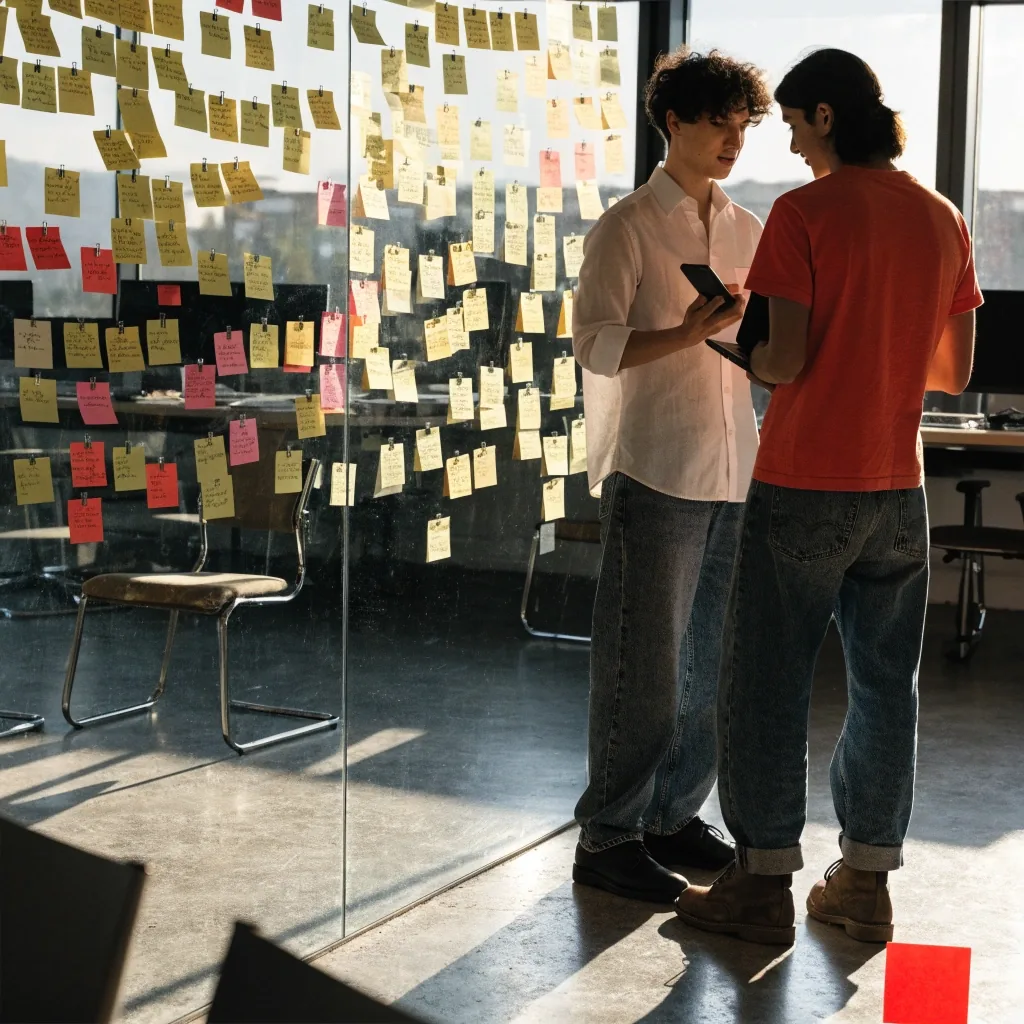
Scheduled calls, email threads, and one shared channel per active project.
6 — Before you write
Still deciding? Read first, then message
Native or cross-platform — how do we choose?
The answer depends on what the app has to do with the device, how often you plan to ship updates, and how much you want to spend on two codebases. A shared codebase suits many business apps. Heavy camera, sensor, or offline work can push the decision the other way. If you are still deciding, say that in your message and we will tell you where your requirements point. The Insights page covers the tradeoffs in detail.
Does my idea need custom development at all?
Sometimes the honest answer is that an off-the-shelf tool, a small internal script, or a lighter first version will cover the need. Custom development earns its cost when your workflow does not match the tools on the market, when one system has to talk to another, or when the product itself is the business. If a smaller build would serve you, we will say so instead of quoting a larger one.
What if the project is already halfway built?
That is a rescue inquiry, and it is welcome. Tell us the platform, whether you have repository access, and where the last team stopped. We look at the code before promising anything, because the honest recommendation depends on what is actually there. Sometimes most of it is sound and only the release path needs work; sometimes starting clean is faster. You get that assessment before you commit to either.
Is there a cost to the first conversation?
No. The initial exchange is about understanding the problem and telling you whether we are a fit. Paid discovery is a separate, defined step we describe with its scope and its cost, and you decide then whether to go ahead. Neither the process page nor the insights library is a prerequisite for getting in touch.
7 — Start the conversation
Send one paragraph. We will take it from there.
Write to the form above, email us directly, or call during studio hours. We answer project inquiries, questions about an existing app, and rescue requests. No sales sequence, no pressure to book a call before you are ready.
Make contact
ChopDawg · 1201 West Peachtree Street NW, Atlanta, GA 30309, United States · Monday–Friday, 9:00 AM – 6:00 PM Pacific Time