
Custom App Development for U.S. Businesses
ChopDawg is a custom mobile and web application development company. We work with U.S. businesses that have a product to build or a build that has stalled, and we take it from product discovery through launch, release, and the years of maintenance that follow. If you are weighing native iOS against cross-platform, or wondering whether your internal tooling can become a real product, start here.
Design, engineering, and the years after release
We design, engineer, and maintain mobile and web applications. That covers native iOS and native Android builds, cross-platform apps that share one codebase across both stores and the browser, and the API integration work that connects an app to the systems a business already runs on.
Full-cycle development means we stay on the project after release: crash triage, OS version updates, and the small fixes that decide whether an app still works well in year three. We are not a body shop that hands over a repository and disappears.
Most teams arrive with one of two problems: an idea that has never been scoped, or a build someone else started and left half-finished. Both start the same way here — with discovery, an integration map, and a first release you can actually put in front of users.
Most stalled projects skip straight to screens. We begin with product discovery: who uses this, what they do today instead, which integrations are non-negotiable, and what the first release has to prove. From there we scope an MVP you can put in front of real users, then decide what earns a place in version two. This stage usually changes the plan, and that is the point. A two-week discovery conversation is cheaper than six months of building the wrong thing.
There is no default answer here, and any studio that gives you one before asking about your users is guessing. A camera-heavy field service tool with offline requirements often justifies native iOS and native Android. A content or scheduling product with a shared backend usually does well on cross-platform, with native modules where the platform genuinely differs. We will tell you which side of that line your project sits on, including the cases where the cheaper option is the right one.
The part of a project that most often moves a deadline is not the interface. It is the connection to an existing ERP, CRM, payment processor, or a legacy system with documentation from 2011. We map integrations during discovery, flag the ones that need vendor cooperation, and build against sandbox environments before touching production data. If an API does not exist, we say so early and price the workaround honestly.
Visual development platforms are genuinely useful for prototyping a flow, testing an internal tool, or validating demand before you fund engineering. They run into trouble with complex permissions, offline behavior, unusual integrations, and long-term ownership. When a project outgrows those limits, a rebuild costs more than building it right the first time. We are happy to say which category your idea falls into.
Web apps are not the consolation prize.
Plenty of business problems do not need an app store at all. A web app development build can reach users on any device, ship without store review, and integrate with the same APIs as a mobile client. We build browser-first products when distribution, internal access, or rapid iteration matters more than a home-screen icon. Some clients start there, learn from real usage, and add mobile once the workflow settles.
See how we workAI and AR, added where they remove a step
AI features earn their place when they remove a step a user already takes: summarizing an intake form, routing a support request, transcribing a call. AR is useful in retail, education, field service, and entertainment when the device supports it and the UX is designed around the camera, not bolted onto a normal screen flow. Both add cost and maintenance weight. We will build them when the use case holds up, and recommend against them when it does not.
Release channels and what they require
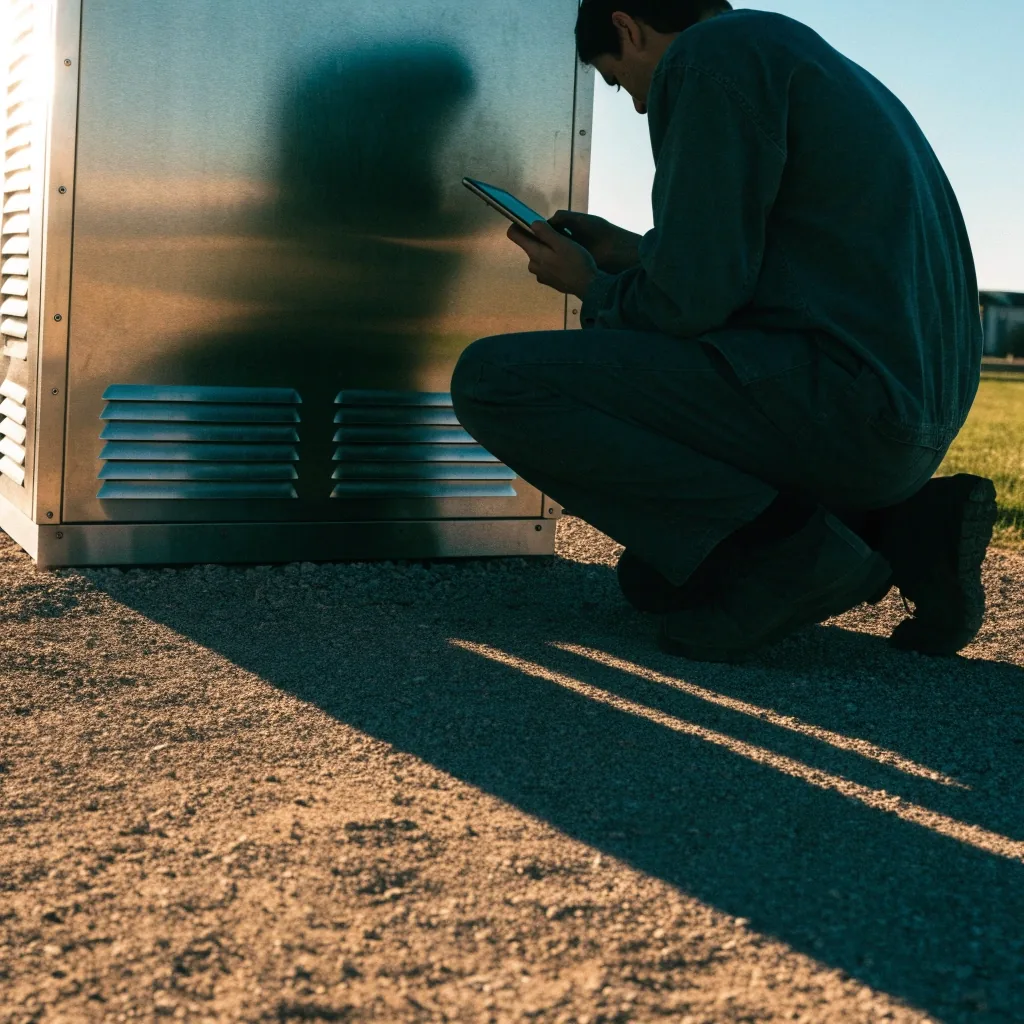
Your app lives or dies by two gatekeepers. The Apple App Store review process and Google Play's policy requirements both shape planning: privacy disclosures, data collection forms, account deletion rules, and screenshot requirements all land before launch, not after. We treat store submission as a project phase with its own checklist, and we plan update cycles around OS releases that change behavior in shipping apps.
Privacy-first is an architecture decision
Privacy-first means collecting the minimum data a feature needs, storing it where it belongs, and being able to explain every field to a reviewer or a customer. It shows up in how we design authentication, analytics, and third-party SDKs. It is also practical: apps that handle personal data badly get pulled from stores, and the cleanup is expensive. We would rather build the constraint in at the start.
Who we work with
ChopDawg works with startups taking a first product to market, established U.S. companies replacing a legacy internal tool, and teams that need a second engineering partner on an existing build. Some engagements are a full product from zero. Others are rescue work: an audit, a scoped recovery plan, and finishing what someone else started. Both are normal here.
How an engagement usually runs
A typical project moves through discovery, design, build sprints with a working demo every couple of weeks, a release phase, and then a maintenance agreement. You get a named point of contact, access to the repository, and documentation as we go rather than at the end. Timelines depend on scope and integrations, and we would rather give you a range with assumptions listed than a number pulled from the air.
Discovery, priced on its own
The work you do before anyone writes production code: users, current workarounds, the integration map, and what release one has to prove. It is priced separately so you can stop there if the numbers do not work.
Fixed-scope build phases
We quote fixed-scope phases rather than open-ended hours, because hourly billing rewards the wrong behavior on both sides. Build phases are estimated against the integration map, so the lines with real risk are the lines that get the attention.
Maintenance on a monthly agreement
A monthly agreement with a defined response window covers crash triage, OS version updates, and the small fixes that keep a shipping app working. If your budget does not fit the plan, we will tell you what to cut rather than quietly shrink the quality.
How much should a custom app rely on cross-platform code versus native iOS and Android builds? Open Close
It depends on hardware access, offline behavior, and how much the two platforms need to differ. When the feature set is largely shared, cross-platform reduces cost and maintenance load. When the app leans on sensors, background processing, or platform-specific UI, native builds repay the extra work.
What features actually justify adding AI to a mobile or web application? Open Close
Ones that remove a step the user already performs. Summarizing a form, classifying an incoming request, or transcribing audio are common examples. If the feature only demonstrates that AI exists, it adds cost and a failure mode without helping anyone.
How do you estimate scope when existing business systems are involved? Open Close
We map every integration during discovery, note which ones need vendor cooperation, and test against sandbox environments. Where an API is missing or undocumented, we scope the workaround as a separate line item instead of hiding it in a general estimate.
How important are App Store and Google Play release constraints in planning? Open Close
They set hard requirements around privacy disclosures, account deletion, data collection, and asset formats, and review can reject a build for reasons unrelated to code quality. We schedule submission as its own phase and budget time for at least one revision cycle.
When is a no-code or low-code approach enough, and when is custom development necessary? Open Close
No-code handles simple flows, internal tools, and early validation well. It struggles with complex permissions, offline use, unusual integrations, and long-term ownership. If you expect the product to be central to your business, custom development is usually the cheaper path over time.
Bring us the build, the idea, or the half-finished version.
Send your project details and we will come back with the questions that matter: who the app is for, what it has to prove first, and which integrations decide the timeline. Our process page walks through discovery, build sprints, release, and the maintenance agreement that follows.
Talk to the studio
- [email protected]
- Phone
- +1 404-532-5666
- Studio
- 1201 West Peachtree Street NW, Atlanta, GA 30309, United States
- Hours
- Monday–Friday, 9:00 AM – 6:00 PM Pacific Time